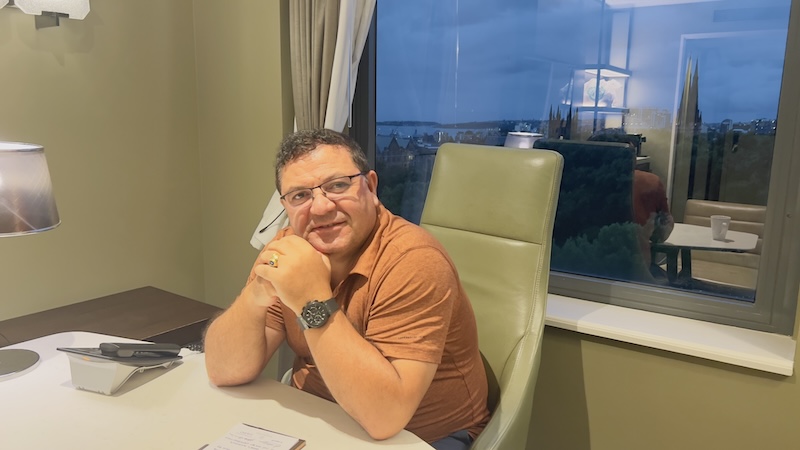
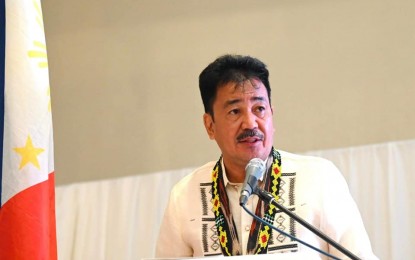
Last week, I highlighted an excellent initiative happening in the Davao area – the College Education Behind Bars (CEBB). Dr. Aland Mizell and Atty. Susan Cariaga from the Social Entrepreneurship Technology and Business Institute worked with public universities and government agencies to create the CEBB at the Davao City Jail and the Davao Prison and Penal Farm. The CEBB experience demonstrates that while justice holds individuals accountable, it must also enable them to change. It requires responsibility for misconduct but also trusts in a person’s ability to start anew.There is a champion for penal reform in the judiciary – Sandiganbayan Associate Justice Karl B. Miranda, who has dedicated himself quietly, away from the spotlight, to penal reform ever since he was with the Office of the Solicitor General. Karl Miranda and I served in the office of senator Nene Pimentel from the 11th to the 12th Congresses, often called “mga anak ni Tatay Nene” (children of Nene Pimentel), because we worked alongside him and aimed to emulate one of the few incorruptible national leaders. I was a professor at UP NCPAG, while he was on detail from the Office of the Solicitor General to the Blue Ribbon committee during this period.
During his interview on the Supreme Court of the Philippines podcast held in observance of National Correctional Consciousness Week, Miranda’s efforts were fully recognized.
Justice Miranda spoke about equality before the law and the continuing task of correction.
“Anyone can go to prison,” he said. “From the lowest to the highest citizen – anyone.”
It was a simple statement, but it carried weight. No one is above the law. Those who commit crimes must face judgment and serve every part of their sentence.
He reminds us that the law’s work doesn’t end with a conviction. Justice must also consider what happens to the person after serving the penalty.
Justice Miranda often speaks of the two main goals of imprisonment: holding the offender accountable for the crime and providing the offender with the opportunity to reform.
“The human person is not the crime,” he said. “Justice threads the needle between accountability and reformation.”
That balance lies at the heart of any humane penal system. The country’s Bureau of Corrections embodies this principle in its very name. Confinement is not meant to destroy a life but to correct it – to help a person rejoin society with a renewed sense of responsibility.
Justice Miranda knows change is possible because he has seen it. While he was with the Office of the Solicitor General, he volunteered to teach in the college program run by the University of Perpetual Help System (UPHS) at the New Bilibid Prison.
He persuaded senator Pimentel, justice secretary Raul Gonzales, Chief Justices Rey Puno and Alexander Gesmundo and Justice Midas Marquez to visit the NBP to share their life stories with the PDLs and to offer hope rather than despair.
He also invited Henry Sy, who sent his officials to check products made by PDLs that can be sold at SM Kultura.
SMC’s Ramon Ang visited and donated P100 million worth of food for distribution through the BuCor and the Philippine Jesuit Prison Ministry. Ang also contributed P50 million to refurbish the old school building, which was donated by spouses Jaime and Bea Zobel. The funds were used to purchase computers, uniforms and shoes for the PDL students.
Many PDLs walk into the classroom burdened by regret but leave feeling hopeful. For many, learning becomes a way to rebuild self-worth. Education teaches discipline, patience and the hope of a better future.
Like the experience in CEBB, many individuals who have served time in prison now demonstrate that change is possible.
The UPHS BS Entrepreneurship program has produced graduates now working as baristas at the Ex-Preso Coffee Carts operated by the Philippine Jesuit Prison Service (PJPS), earning honest livelihoods and serving the community with quiet dignity.
Others have discovered a new life through art. The Bagong Buhay Group of Artists, also composed of former PDLs, now teaches painting and hosts art exhibits. They demonstrate that redemption can take shape in beauty and creativity through color and craft.
Recently, UP Open University and the UP Alumni Association partnered with BuCor to launch the “Workforce Development for Persons Deprived of Liberty (PDLs)” initiative to increase access to education and offer hope and second chances.
Each PDL story is a reminder that correction happens when people are given a second chance and make the most of it.
Clearly, reintegration – returning to society – is the ultimate measure of justice. Someone who has served their sentence and paid their dues should be permitted to rebuild their life.
Closing the door on someone who has already made amends is like punishing twice. But when a community welcomes the reformed with fairness and faith, it completes the work that the law started.
When a person leaves prison ready to live honestly and society allows him the chance to do so, justice has done its duty. It has upheld the law – and it has restored life.
We need more Justice Mirandas in our judiciary to continue penal reforms.