
 Relations between the Persians and the Arabs have always been a problem, not only because of a growing power struggle in the region, but also because of a long history of rivalry that caused deeply embedded animosity toward each other. The majority of Iranians hate Arabs, and the majority of Arabs hate Iranians as well. Especially the Iranian religious people and intellectuals often show their resentment of Arabs, which most often comes in the form of curses directed at the Islamic Sunni sect. Those who study the history of Islam and the Middle East will clearly understand the reasons for the Arabs’ constant attacks on Shiia Iranians or for Iranians’ constant attacks on Sunnis. The Shias’ hostility stems from their hatred of Arabs not only because of hegemonic conflict in the Middle East, which is true, but also because of its root in history.
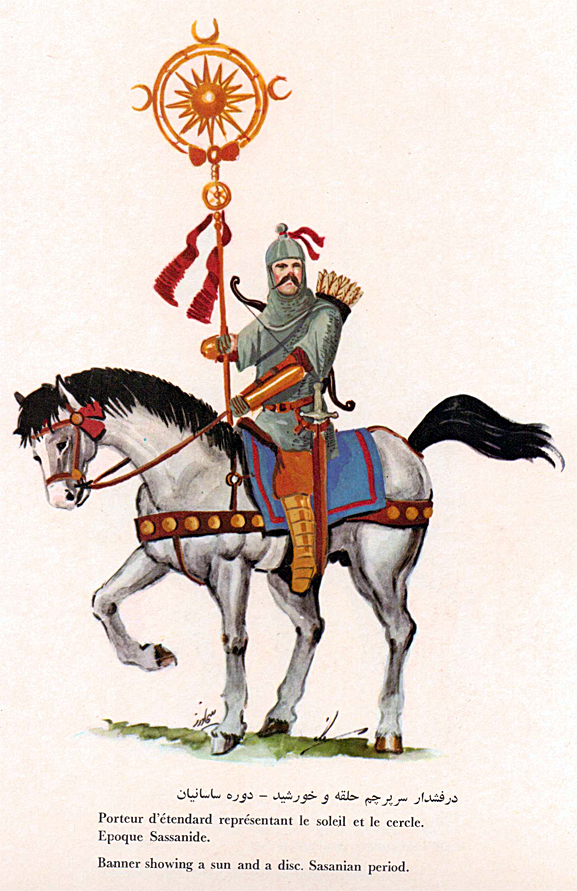
Persians will never forget their defeat at the hands of Arabs in the Battle of Qadisiya 1400 years ago. Most Iranians have a strong sense of national identity. Further, Sunni Islam does not accept Shia Islam as true Islam and consider Shias as wrongly practicing Islam. But Shias believe that they represent true Islam and Sunnis do not. The Arabs defeated the Sassani Empire and converted them to a new religion, that of Islam.
Mohammad, a member of the Hashimite clan of the powerful tribe of Qurays, declared his prophetic mission in 612 and eventually conquered his birthplace Mecca to form the new Islamic faith. At Muhammad’s death in 632, Abu Bakr, the first caliph, begin the campaign against the Byzantine and Sassani Empire. Abu Bakr defeated the Byzantine at Damascus in 635, and then began to conquer what today is Iran. In 637, the Arabian army occupied the Sassani territory, and in 642, they defeated the Sassani army. The majority of the population accepted Islamic rule without resistance until 650. The majority of Iranians became Muslim in the ninth century.
Although the Umayyad, the Muslim rulers who succeeded Mohammad from 661- 750, tend to emphasize Arabs among the Muslims, the Iranians slowly formed a new community. Iranians did serve as administrators after the conquest of the Sassanis and contributed significantly to all aspects of Islamic learning. The new state religion, Islam, imposed its own system of beliefs and social norms. Arabic became the official language, but Persian continued to be used as the spoken language.
The Schism in Islam
| Arabs | Persians |
| Gulf states, Afghanistan, Pakistan | Iranians |
| Sunni | Shia |
| Umayyad | Sassani Empire |
| Codified traditions of Mohammad | Interpretations of Quran as party of Ali |
| Arabic language | Persian language |
Shia Islam was not initially an Iranian religious movement; it was another legacy of the Arabs’ invasion of Iran. In the great schism of Islam one group among the community of Muslims argued that leadership of the Muslim community following the death of the Prophet Mohammad rightfully belonged to Mohammad’s son-in-law Ali and to his descendants. This particular group came to be known as the Shias. Supporters of Muawiya challenged Ali’s elections to the Caliphate in 656. After Ali was killed while praying in a mosque in 661, the majority Islamic community, which had its capital at Damascus in Syria, declared Muawiya the caliph. Ali’s son Hussein refused to accept Muawiya’s son and thus Ali’s Hussein fled to Mecca, where he led a revolt united with the branch of Shias who are mostly those living presently in Iraq. At Karbala, located in Iraq, Hussein was defeated by Yazid I, the leader of the Umayyad who received the head of Hussein, so that Hussein’s death in 680 continues to be observed as a day of mourning for all Shia Muslim believers, many of whom go on pilgrimages to this Shia shrine. Under the Safavids Empire the majority of Iranians became Shias. The Abbasids overthrew the Umayyad in 750, when the received support of both Arabians and Iranians. The Abbasids established their capital at Baghdad. Under the Abbasids rule, the Islamic world economically and culturally prospered. Later the power of the Abbasid caliphs diminished and a series of independent and indigenous dynasties rose in various parts of Iran.
Iranian people trying to gain supremacy in the region do not have political ambitions as much as racist driving forces for the Iranians to show they are superior. When you listen to Iranian politicians, ministers, or imams you can see that derogatory tone they use which focuses on the racial and not political superiority of Persians. The same is the case when you listen to Arabs or religious people because they will tell you that Iranians have never been a friend of Islam in its history. For example, regarding the United Arab Emirates (U.A.E), many Iranians make jokes about it, saying that if Iranians just blew some air across the Persian Gulf, they would wipe the U.A.E off the map. You can see Persians’ hate against Arabs in language, and that the establishment of the Persian Language Institute was a plan to remove Arabic words from the Persian language. Iranians’ racism denounces not only Arabs but also other minorities, such as Kurds who live in Iran.
Iran is trying to establish another proxy in Yemen in order to have its presence near the border of Saudi Arabia as well as close to the Gulf countries. By supporting the Houthis, a minority Shia group, Iran is provoking Saudi Arabia to have national security concerns over the possibility of a war spilling across its borders. Consequently, Saudi Arabia will work Iran’s long term strategic and geopolitical goals have influence over Arabs States from Beirut to Baghdad and from Syria to Yemen. Iranians already sponsoring, financing, equipping, training and advising Shiite groups in the region. Once the Houthis succeed in Yemen, Iran will influence or pressure Saudi Arabia to accept Iran’s dominance in the region. Houthis played a key role in the Arab Spring in 2011, forcing the long-term Yemen dictator Ali Abdullah Saleh to leave his power after a thirty-three year rule. Iran is fighting against the ISIS in the region but trying to drive out the Sunni ISIS to replace the territory with its own Shia control. After fourteen centuries of simmering conflict, the schism between the Sunnis and the Shia continues to speak the language of force to establish dominance now in the war in Yemen.
Dr. Aland Mizell is President of the MCI and a regular contributor to Mindanao Times. You may email the author at:aland_mizell2@hotmail.com