
 As the Middle East is boiling, flames continue to spread to neighboring countries. The rapid march of the Islamic State of Iraq and Levant (ISIL) from Syria to Iraq has rattled Ankara. The body of the Israel teenager who was kidnapped in the West Bank was found; now the Palestinian–Israeli conflict is also heating up along with Iran’s nuclear problem, civil war in Syria and in Egypt. At one point during the Arab Spring many in the West and global commentators rushed in suggesting Turkey could be a model for the Islamic world, to show that democracy and Islam could be compatible. However, Turkish Prime Minister Recep Tayyip Erdogan and the leader of the Islamic fundamentalist mission movement Fethullah Gulen are fighting over control of the Turkish state. Now the Turkish government is fighting with the Deep State or the state within the Turkish state founded by Imam Gulen.
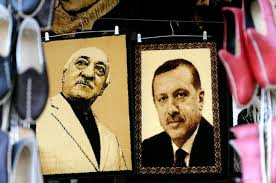
The Turkish government is struggling with the personality cult called Gulenism. The struggle is not about secularism, the Justice and Development Party (AKP), democracy, or elections, but it is a struggle for control of the Turkish state itself. Gulen’s movement spent more than three decades secretly infiltrating the Turkish judiciary, police, military, bureaucracy, and all aspects of the Turkish society. Gulen’s goal is to promote and implement his version of Islam as a third way or an alternative system to the capitalist system. That’s why the Gulen movement has spent more than thirty years aggressively expanding its presence in the education sector in Turkey and around world.
The movement, founded by Turkish Imam Fethullah Gulen, who escaped from Turkey in 1999, and now lives in self- imposed exile in the United States with a secretive communication strategy and connections to the Turkish police, judiciary, and bureaucracy has emerged as a powerful enemy of Turkish Prime Minister Erdogan. Gulen continues to deliver sermons and teachings via the Internet. He once supported the Prime Minister’s center-right AKP, manipulating the AKP party, putting the secular military personnel in jail, and replacing them with his followers.
Gulen became more powerful internationally in the era of the AKP party having opened hundreds of schools, established NGOs, and placed his followers in critical positions within the Turkish government. Even some of the Turkish teachers obtained diplomatic passports to come and go freely to the US. The Gulen movement has newspapers, TV channels, NGOs, schools, universities, hospitals, banks, businesses, publishing houses, and educational institutions. Prime Minister Erdogan finally realized the network’s far-reaching influence calling it “a parallel state.“
Gulen called his movement Hizmet (which means “the service“). One of the reasons Gulen’s movement became so powerful is because they are so secretive, and they always manipulate people. From its inception Gulen preached Turkish nationalism, believing that he and his followers are Allah’s chosen people and he is talking to God. Gulen has estimated more than five million followers and supporters. His movement is well organized like a cult, and his followers make speeches about universal love and distribute flyers with photos of celebrities or famous people on them who support his movement. But behind the scenes of his educational image making his followers will promote Gulen’s ideology
The Gulen movement became more powerful when the Soviet Union collapsed in 1989, opening a door for Gulen to establish his schools in the Central Asian countries, but now he has opened thousands of schools throughout the world including in the Philippines. Gulen opened the first school there in 1997, the Filipino–Turkish Tolerance High School in Zamboanga City, and has established the Fountain International School in Manila and its Santolan branch both fostered by the Turkish Confederation of Businessmen and Industrialists (TUSKON). His schools recruit the intelligent students and offer them scholarships in Turkey, and then when the students finish school and go back home, they become followers or disciples of the Gulen movement.
The Gulen movement is using its media outlets, like the Zaman newspaper, to defend itself against Prime Minister Erdogan in what it sees as slander on the part of the government. The majority of the Turkish people are skeptical about the trustworthiness of Gulen and his followers seeing it as an opposition movement. If the Prime Minister cannot finish this group, the Turkish democracy is in danger because the movement is without any transparency or political legitimacy when it comes to contesting the authoritarianism in Turkey. No one can object to Gulen’s view; he is absolute and considers himself the chosen one. Because the structure of the Gulen movement is hierarchical, like that of the Pope, and because Gulen is considered a holy man, he is the running the organization, so that nothing happens without Gulen’s permission. On December 17th 2013, Gulen attempted a civilian coup against the AKP party, especially Prime Minister Erdogan, but it failed. Gulenists later campaigned against Prime Minister Erdogan in the local election, but Gulenists were defeated in the elections.
The founder of the Republic of Turkey, Mustafa Kemal Ataturk, wanted to see Turkey westernized to be like European nations. Turkey is predominantly a Muslim nation, and a member of NATO. It is very strategically located as a geopolitical bridge between the Muslim East and the West. At present Prime Minister Erdogan is running for the office of President. For the first time in Turkish history a president will be elected by popular vote. This will be good for Turkey to address such issues as resolving the Kurdish conflict, drafting a new constitution, maintaining political stability, and continuing to fight against the parallel state in Turkey. Erdogan has been the most successful political leader by winning elections and forming a strong government, going after untouched issues such as secular elites and the Gulen movement in spite of an attempted coup and corruption allegations. Turkey is pushing for a presidential system like the United States’ especially the current Prime Minister Erdogan, who wants to have a presidential system to give more power to the local states, so the Kurdish issues can easily be solved because local people will have more power to run their own internal affairs.
Polls suggest a similar outcome in the August 10th presidential elections. Erdogan’s support level remains higher than that of opposition parties. The current political system in Turkey is a parliamentary democracy, which gives considerable power to the president, such as ratifying or vetoing new laws and appointing members of the judiciary, university presidents, and ambassadors; this kind of model can cause a political crisis between the president and the government. This will be a good thing for Turkey’s democracy, because minority rights will keep Turkey more stable than its neighboring countries.
Dr. Aland Mizell is President of the MCI and a regular contributor to Mindanao Times. You may email the author at:aland_mizell2@hotmail.com