 For nearly a century Turkey was ruled by Kemalist oligarchies that exploited the country and for decades with international support of these oligarchies. Mustafa Kemal Ataturk, the founder of the Republic of Turkey, ended the Islamic role as the state religion, banned teaching Islam in schools, and adopted the Western culture and education system. After Ataturk’s death, the military saw itself as the guardian of Ataturk’s legacy and banned all the Islamic parties, institutions, and symbols in conformity with Ataturk’s vision of Turkey being a Western-like country.
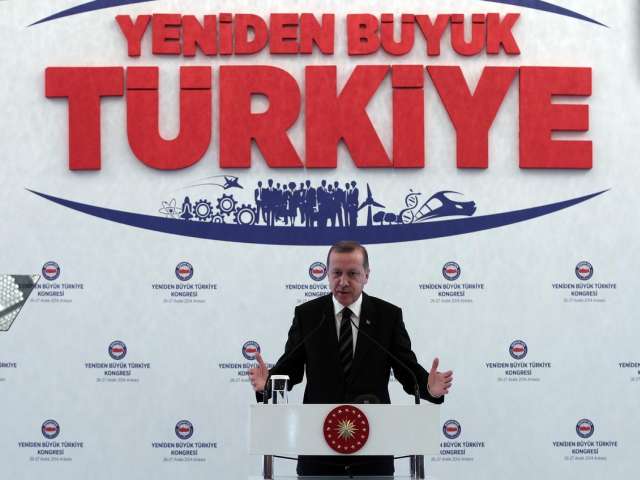
For decades Turkey was a dutiful ally that mostly followed America’s lead, but the nation today does not look much like its 20th century oligarchs might have imagined it. That is because Turkish President Erdogan and his government, led by the governing Islamic AKP, has asserted a more independent foreign policy in the Middle East, which often puts it at odds with the former Kemalist oligarchies in Turkey and in Washington. After the collapse of the Ottoman Empire the Middle Eastern countries were colonized by Western countries, over time leading to a handful of dictators who ruled the Middle Eastern countries with an iron fist so that supporters from the West are locked up, exiled, or killed, leaving the Middle East as failed states and in turmoil. But the Arab Uprising changed the Middle East forever. The Middle East lost its former bosses, and the people now know the source and character of their repression. Now the question is who will lead the new Middle East?
There have been disagreements over the Israeli- Palestinian conflict, the War in Syria, Turkey’s relations with Iran, the coup in Egypt, the Iraq War, and, among other things, Turkey’s relations with the Kurds. Critics of Turkey have questioned Turkey’s sincerity as a NATO ally including its refusal to fight against ISIS. The Turkish independent foreign policy under the APK Islamic party reflects its ideology, and the Turkish foreign policy toward the new Middle East is often used as an illustration of the regional influence of a neo-Turkey. Under the AKP Islamic party the new Turkey follows mainly a realist foreign policy toward the new Middle East and uses its idealism for Turkish national interests.
Turkey ‘s foreign policy is its successful combination of Islamic identity and peace with other Middle Eastern countries. The wars in Syria, Egypt, and Libya, bring Turkey ultimately into conflict with the other regional hegemonic powers, including Israel, the USA, Iran, and Westerns countries. One example is the disagreement between Turkey and the Saudi government when the Egyptian military, led by the General Abdul Fatah El Sissi, toppled Egypt’s democratically elected President, Mohammed Morsi, in 2013. Turkey was against the Sissi military coup, but instead supported the Muslim Brotherhood’s Morsi. Saudi Arabia was against the Muslim Brotherhood’s leader, who was not welcomed by the Saudi government, and consequently it designated the Brotherhood as a terrorist organization. In recent months Washington’s policy toward the War in Syria has changed, and the Arab regime has increased already existing problems between the Turkish government and the United States. Washington wanted to pressure Turkey into entering a full-blown combat against the ISIS while ignoring the actual causes of the civil war produced by the Assad regime, but hoped to have local players save Kobani from annihilation.
Critics of the New Turkey also argue that the AKP is becoming intolerant of domestic opponents and is promoting an ethno sectarian agenda in the Middle East, because of Turkey ‘s harsh response to Gulen ‘s religious cult that has established a government inside the government thereby weakening democratic institutions. If Turkey is successful in eliminating this religious cult, Turkey will remain more democratic than other countries in the Middle East with its free and fair elections, and its policy of not eliminating its political opponents nor persecuting its ethnic and religious minorities, at least to the same degree as its neighbors or that it did in the past. Under the AKP Islamic party the New Turkey is trying to change the region from the despotism and outside intervention that has plagued it since the end of the Ottoman Empire. The war of 2008 between the Israelis and the Palestinians killed Palestinian civilians when Israeli forces raided an unarmed Turkish vessel supposing that it was transporting weapons into the region in spite of the embargo. In 2010, President Erdogan called Israel a terror state, a clear indication of its desire to cut ties with Israel in favor of its Muslim brothers. The New Turkey has also managed to start talking with the Kurdish rebels to end the decades old conflict. Turkey has hosted almost two million Syrian refugees, and the KRG in Iraq has become one of Turkey’s closest partners and economic allies. Especially since the end of the war, Turkey has solicited almost all the building contracts in the KRG region and now is buying Kurdish oil in spite of the United States government’s embargo. The US’s Middle East policy under the Obama administration has totally failed, because of Obama’s changed policy toward the Assad regime, his failure to back Morsi’s government, and his policy in the Gulf countries to pursue shorter-term goals, all of which have brought more instability and more distrust among the people in the region.
Another example of the New Turkey’s not taking any orders from outsiders and following a realist approach in its foreign policy is that two weeks ago more than 600 Turkish troops entered Syria, an operation described by Syria as an act of aggression. According to Erdogan, the operation was to rescue the Turkish soldiers and move the tomb of the grandfather of the founder of the Ottoman Empire. Last year during the growing civil war in Syria, the Turkish government under the AKP party made it clear that any attack on the tomb would be considered an attack on Turkey. Turkey does not fight with the ISIS directly and has taken precautions against it just in case ISIS wants to use the tomb as an excuse to push Turkey into war.
Turkey has provided a loan of $500 million to the KRG, which does not receive any support from the Iraq central government to pay the wages of public workers. To overcome this problem, the KRG made an oil export agreement with Iraq’s central government, but Baghdad has not made any payment yet, causing economic problems and forcing the Kurdish officials to seek ways to sell Kurdish oils without being dependent on the Iraq government The Prime Minister of Kurdish Region, Nechirvan Barzani, visited Ankara two weeks ago to discuss this matter with President Erdogan and Prime Minister Davutoglu. Currently, the Kurdish region sells 450,000 barrels on a daily bases, and they are willing to increase this number to 550,000 barrels presently and in the future 1 million barrels a day. Of course America has put an embargo on Kurdish oil not to sell without the permission of Iraq’s central government, but Turkey does not care much about the American embargo instead following its own national interests.
These days give the impression that the Muslims world has no clear vision as to where it stands in the unfolding Middle East developments. Most of the Muslim countries seem as if they are unable to respond to development in the Middle East or around the world. Turkey is using the Sunni political Islam to maintain a regional balance and counter balance to Iran’s hegemonic power. Turkey has made several steps in terms of democratizing and reforming itself and it is a very different Turkey compared to decade ago. For the US/West to have national interests in the new Middle East, they should realize the reality of a new Turkey, which has moved beyond the system of tutelage under the AKP party leadership to become in line with the vision of a new Turkey and a new Middle East.
Dr. Aland Mizell is President of the MCI and a regular contributor to Mindanao Times. You may email the author at:aland_mizell2@hotmail.com