
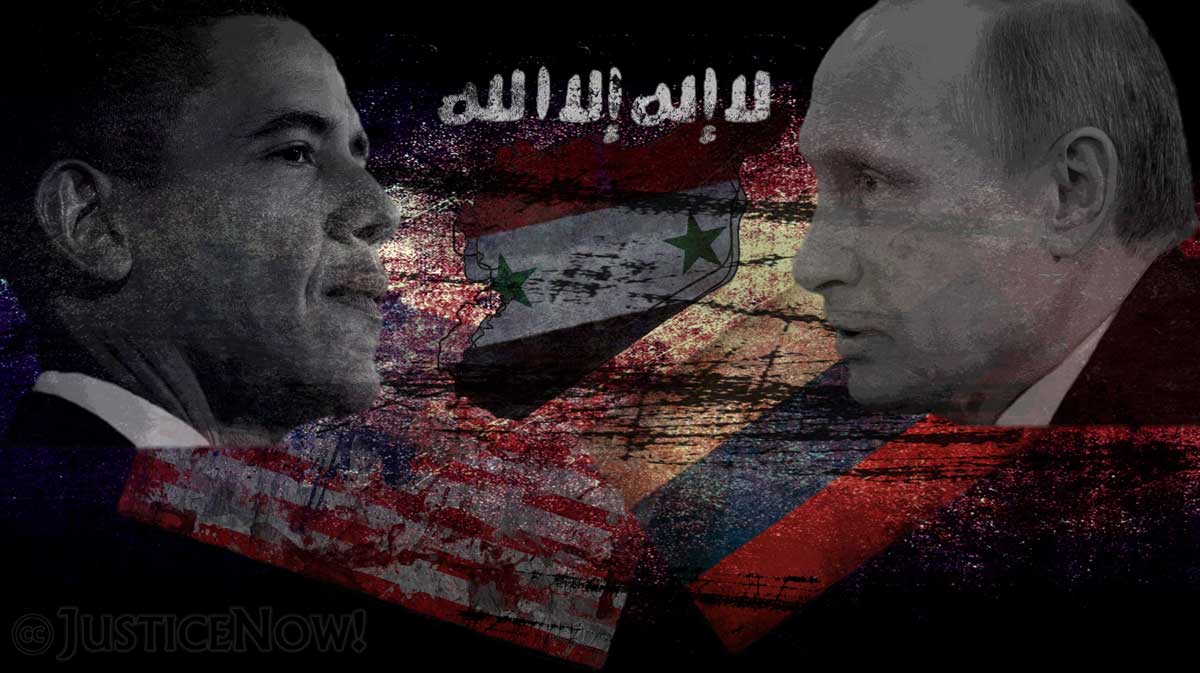
 The twenty-first century carries a lot of baggage from the past. The Cold War may be over, but just as the two global struggles of the first half of the twentieth century left a legacy of trouble, not peace, the current conflict and violence in the post-Cold War world taps into and perpetuates that legacy. That is why today we see that the Cold War has turned hot where Russian President Vladimir Putin is trying to bring the spirit of the Soviet Union back. President Putin has described the collapse of the Soviet Union as the greatest tragedy of the twentieth century. The confrontation between the West and the East, however, did not ignite this conflict. Each region has a history that goes back to long before the wall was built in Berlin. Most of them, in fact, are not products of the Cold War so much as they are the legacy of the European imperial order of the last centuries.
These conflicts have had important indigenous and regional components. Ethnicity, religion, and the animosity between settlers and indigenous people in varying measures are at the root of the conflict. The struggle between Washington and Moscow used these conflicts for their national interests. Both the West and the East offered support in the form of weapons, money, intelligence, and military training in favor of their clients. Worst of all, they appropriated ideological force instead of peaceful solutions. What we see today in the Middle East is that each superpower supports its favorite clients instead of helping to solve the problems and stopping the killing of innocent people.
Little is permanent, but the jockeying for national interests or individual interests remains. Today your friend could become your enemy tomorrow, or today’s enemy could become your friend tomorrow. Russia has long been Turkey’s most feared enemy with the Ottomans fighting brutal wars against Russia. By annexing Crimea and sending troops to Syria, Russia has once again become Turkey’s uncomfortably close neighbor to the north and south, causing great concern in Ankara. In addition, this week the Turkish military shelled targets in Northern Syria to prevent Kurdish expansion into the west of the country. Turkey sees the border activity as a threat to its national security. Right now Turkey and other Sunni countries under the leadership of Saudi Arabia are preparing to conduct land operations in Syria. The United States government rightly continues to provide the military wing of the Syrian Kurdish Democratic Union Party, the PYD, with heavy weapons, including antitank and antiaircraft missiles launchers. But at the same time, the United States would not give any serious military support to the Iraqi Kurdish Peshmerga even though the Peshmerga has helped capture territory from ISIS. Turkey is trying to put Syria’s Democratic Union Party, the PYD, on the terrorist list claiming that the PYD is a sister organization of the Kurdistan Workers’ Party, the PKK, that is the PYD’s parent organization in Turkey. It is fine for Turkey and Turks to support the Turkmen of Bayirbucak in Syria, but is not fine for the Kurdish people in Turkey or in Iraq to support more than a million Kurds in Syria. The fact is that the PYD never attacked in the Turkish territory nor killed any Turkish civilians. With a population of three million Kurds in Syria, their only goal is to rule themselves, because even now the Assad regime has oppressed the Kurds, suppressed their language and culture, and denied them citizenship in their homeland.
The PYD established three self-declared cantos of Rojava or Western Kurdistan, which include Afrin in the northwest, separated from the cantons of Kobane and Jazira in the north and northeast, along the Turkish border. Like other groups’ aim, the PYD’s goal is to achieve territorial autonomy and to defend Kurdish areas in Syria against ISIS. The PYD was established in 2003, and since then, the Syrian group has been deferent to the leadership and ideology of its Turkish brethren. Turkey considered the PYD to be a territorial movement like the PKK in Ankara’s peace talks when the latter collapsed in July, leading to a wave of violence inside Turkey. Turkey cannot ignore the Kurds and cannot continue to deny the Kurdish right to self-rule. Why is Turkey shelling the PYD and why is it so important for Turkey to prevent the PYD from establishing itself west of the Euphrates River? The Turkish government is worried about the possibility of Kurdish independence.
When it comes to the Kurdish question, the Turkish government does not trust their Western allies; when it comes to the PYD, the Turkish government wants to keep the Kurds from establishing an autonomous region in Northern Syria. The Turkish government does not want the Kurds to create a corridor that reaches the Mediterranean Sea. Turkey does not want the Kurds, like other oppressed groups, to have self-rule but wants to rule the Kurds for their national interest. That is why Turkey is against the PYD crossing the Euphrates. The Kurds have the greatest opportunity to rule themselves, but the problem is that Kurds have failed to unite; if they were united, none of the oppressor countries could defeat them, because they are on the right side of history. The problem is that Kurds always choose the wrong friends.
Turkey does not want to get into a land operation in Syria alone. At the same times it does not want Iran and Russia to design Syria, because that would have an economic impact on any interventions, and Saudi Arabia and other Sunni Arab countries would help Turkey on the economic front if Turkey helped Saudi Arabia from the power. Russia does not care about the Kurds or about the Syrians, and Russia will not want to go to war with Turkey over the Kurds. By shelling PYD forces, Turkey is trying to send a message to Russia and Iran underlining the seriousness and indicating that it will not sit and watch Iran and Russia design Syria according to their self-interests. Turkey rejects Russia and Iran attempts to design Syria in way that threatens Turkey. Russia continues to kill civilians in Syria to create a refugee crisis in Turkey and in Europe, so Russian diplomacy serves as a cover for Russian military action in Syria.
Iran and Saudi Arabia have been locked in a Middle East cold war for more than three decades. But now the wars in Syria and Yemen have turned the cold war hot. Saudi Arabia is a Sunni Islamic kingdom that purports a good relationship with the United States and with the West. Iran is a Shia Islamic Republic, established in 1979, as an anti-West and anti-United States state. Both countries have their religious and political ideologies in the Middle East. Saudi Arabia has backed Sunni rebel groups in Syria. Iran has supported the Assad regime. Turkey and Saudi Arabia do not want Iran to exert its influence across the region. With fragmentation, splits, fragile coalitions, and polarized parties in Syria, the region has indeed become hot with seemingly little hope of returning to a cold war short of a united Kurdish movement and a withdrawal of Russia, the US, Iran, Saudi Arabia, and Turkey, not to mention ISIS.
Dr. Aland Mizell is President of the MCI and a regular contributor to Mindanao Times. You may email the author at:aland_mizell2@hotmail.com