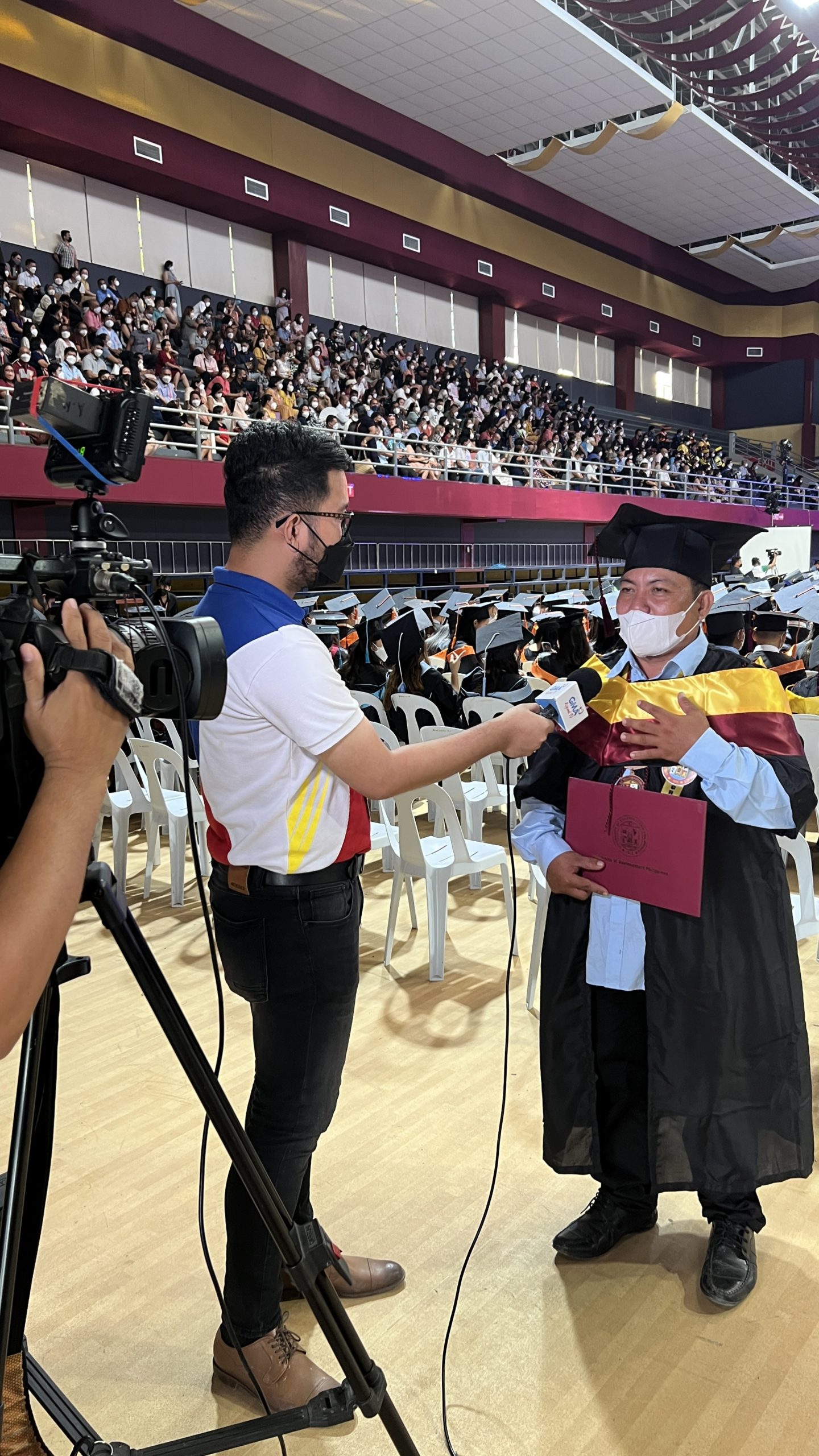
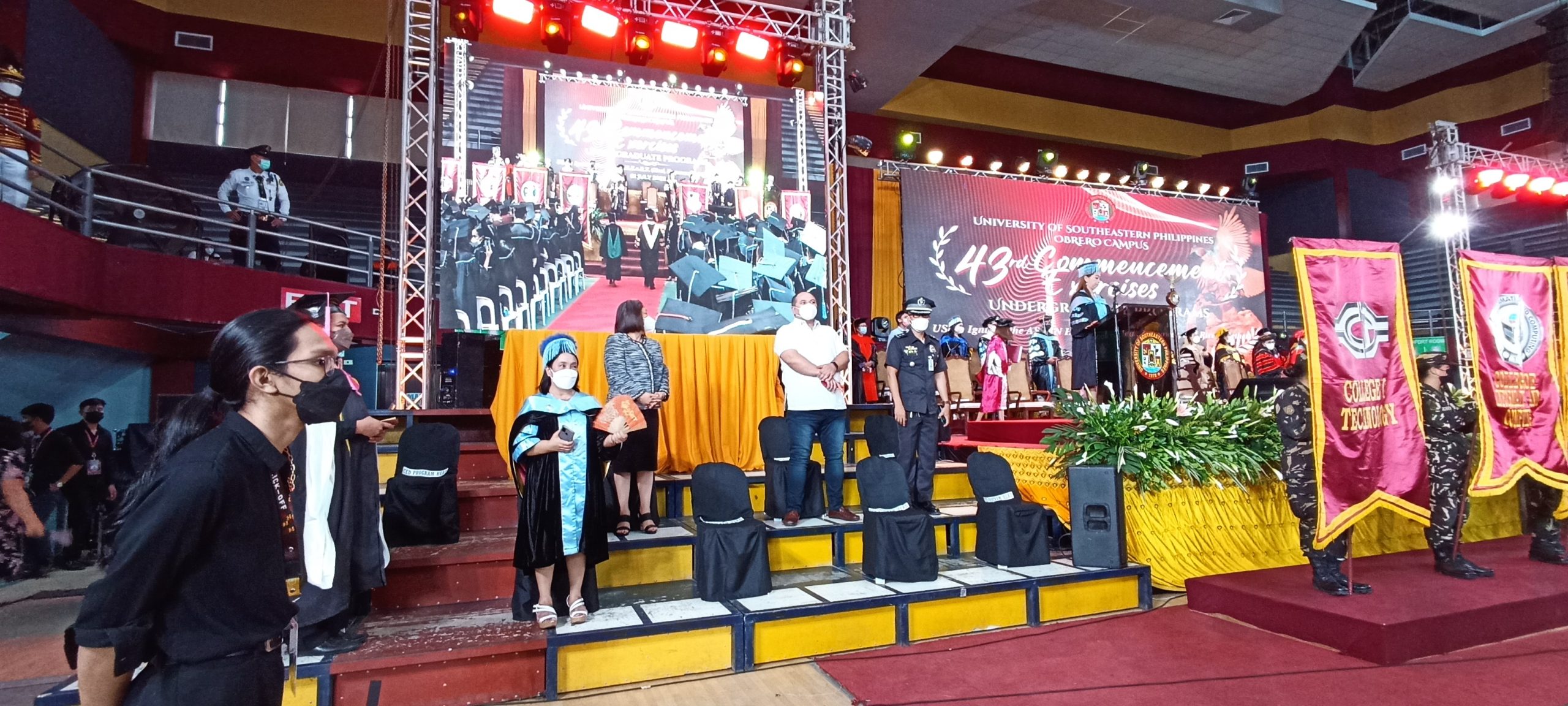
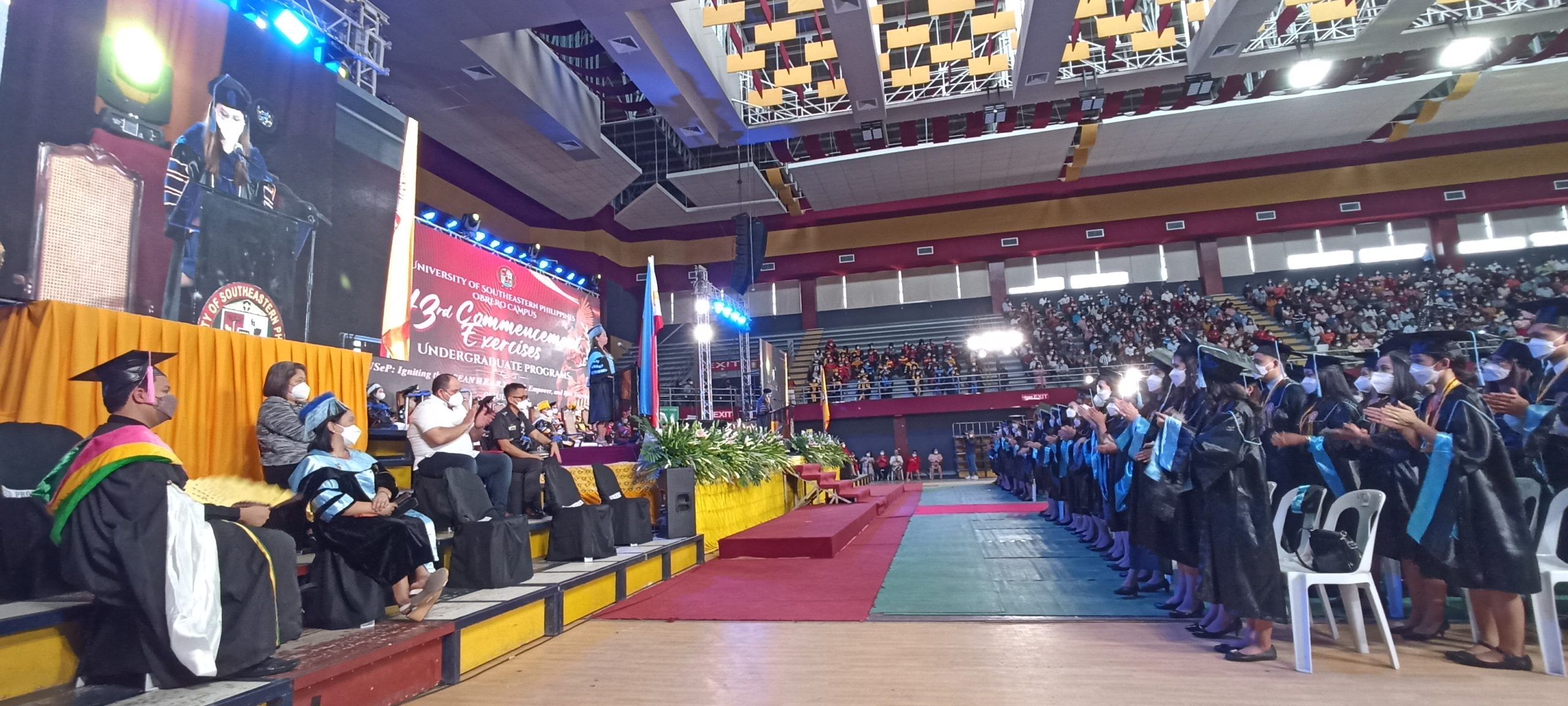
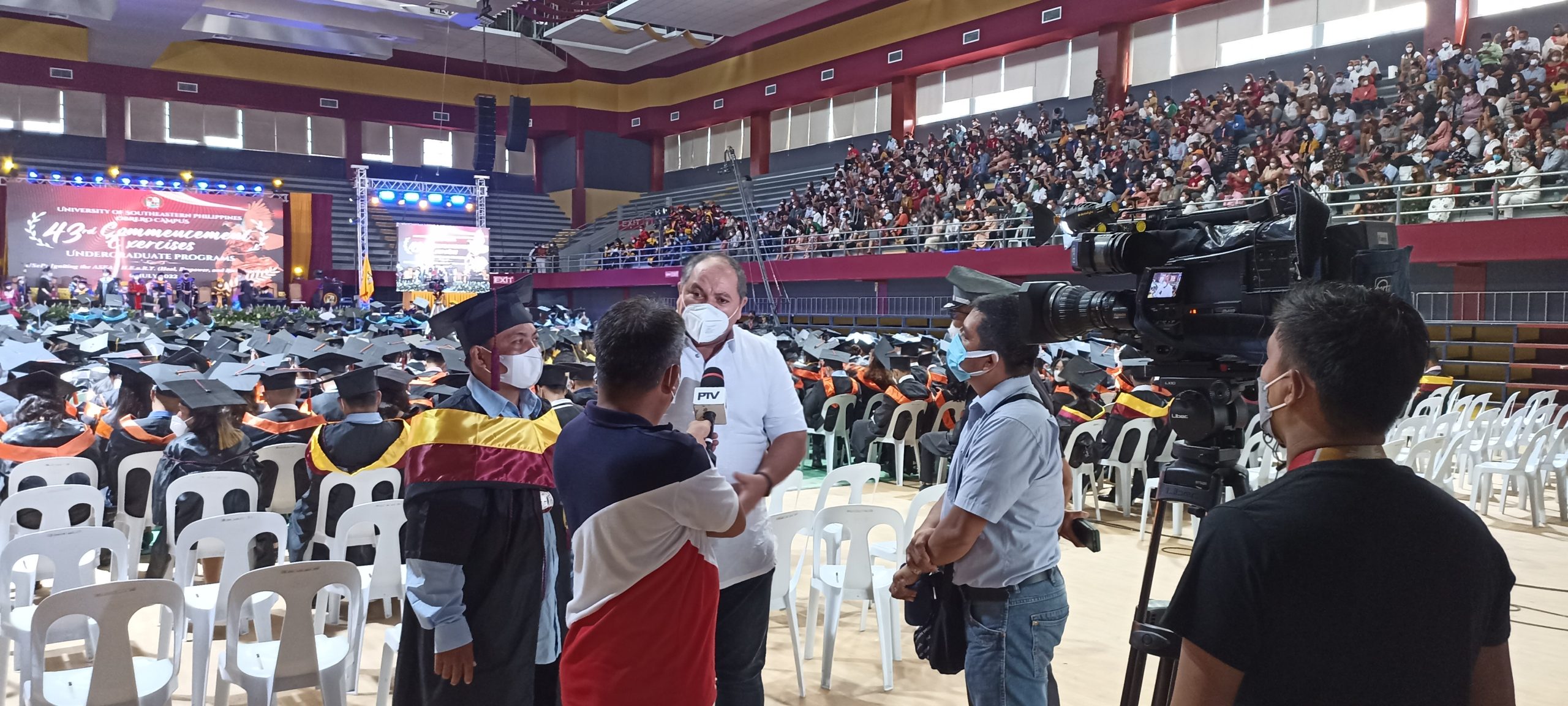
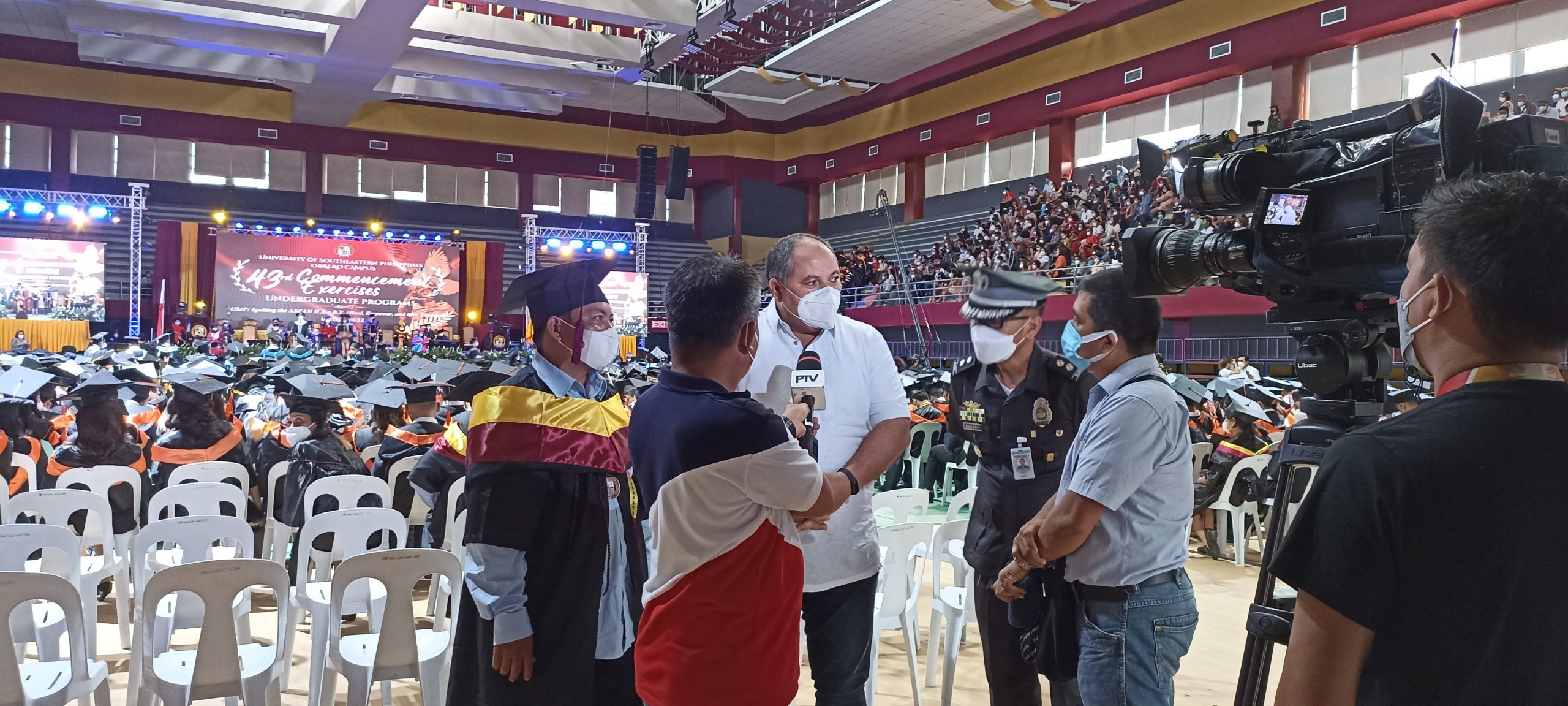
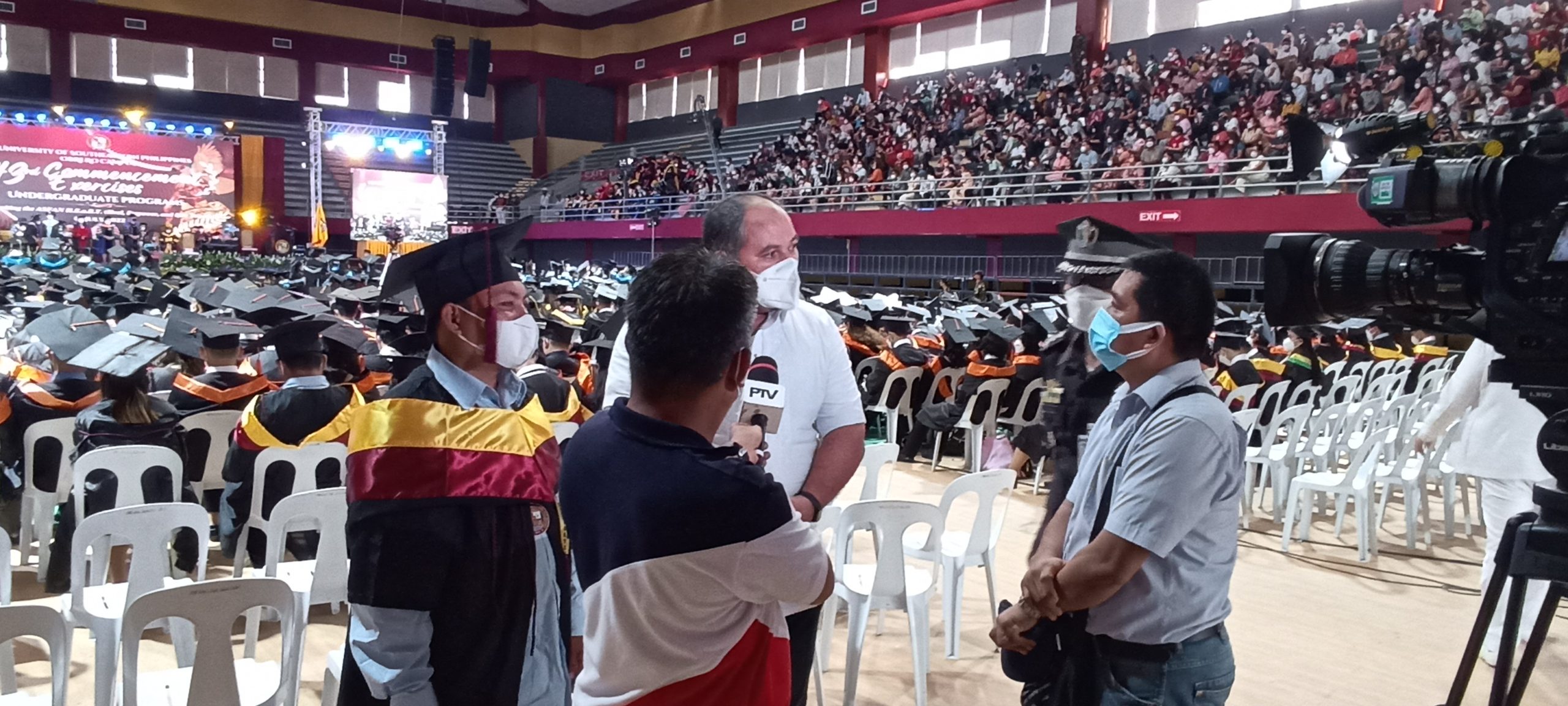
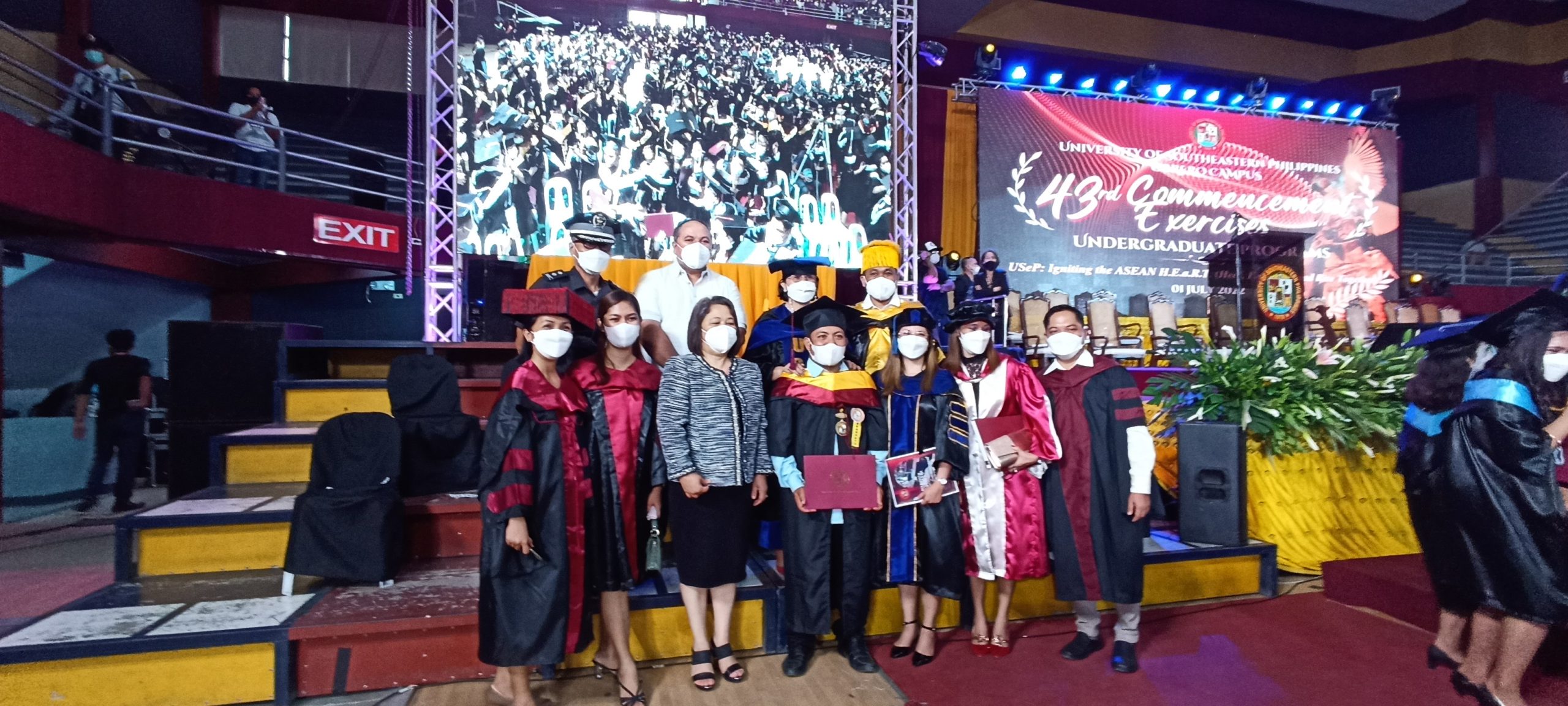
 This week Reny Ornado Aguilar earned his Bachelor of Science in Computer Technology at the University of Southeastern Philippines and is currently working at the Cariaga Law Office. Because Reny’s parents separated when he was a child, he never saw his father. From the time of that separation everything became completely unsettled and dysfunctional for him. The only reactions he could muster were confusion, anger and fear, so he took those emotions and tried to use them as a form of power, resulting in the perfect formula for getting in trouble, going down the wrong path, and landing him in the Davao City Jail where he was sentenced for and to misspending his time and squandering his life. It did not take much time in jail for Reny to realize that his actions were hurting not only himself, but also other people he loved the most, his children. He also realized that he needed to radically change his life if he wanted to be a proud father again.When outside, Reny lacked access to acceptable education, but inside he enrolled in College Education Behind Bars in Davao City that gave him a chance to obtain a quality education. When Reny graduated from college at age forty-two, he proved once again that education cannot be limited by age. He also discredited skeptics who hold that individuals areconfined by their past. If given the right chance, Persons Deprived of Liberty (PDL) can reform and become productive members of society, a transformation that seems impossible until it is done. For Reny his failure was not fatal, nor was his success final; but his courage to continue counted then and now. This undergraduate degree was his first major academic achievement. In tandem with College Education Behind Bars (CEBB), the program offered Celebrate Recovery. While incarcerated at the Davao City Jail, Reny took rehabilitation classes, and through these classes he realized that he is bigger than his problems and that he could understand and overcome his habits and hang-ups.
When Reny was arrested, his children stopped going to school, and some of them started to work just to support themselves and to survive. When people are incarcerated, they are not the only ones being affected, because they hurt the families and loved ones as well. Although his children dropped out of school, Reny now is helping and encouraging them to finish their school,so that his son Laurence has returned to school, and Reny has become a proud father as well asinspiration both for his children and for all of us. Reny’s receiving his diploma made his children very proud, especially his eldest daughter who was crying with joy and pride for her father, and now she plan to follow in his footsteps by attending college.
Another challenge was that on the day that he was released, he did not know where to go, and his mind was still toggling back and forth on what he should do. The need for family restitution and for a job loomed large. Unemployment, according to studies on the high rate of recidivism, proves to be the primary cause of re-incarceration. When released, Reny needed to find a job, so he could eat, support his four children, hold his head up, and know he could handle freedom.
In reality, jobs are hard to find when an individual is an ex-convict. When Reny was released from jail, he had difficulty securing a job, but Attorney Susan Cariaga offered him a full time position at the Cariaga Law Firm. According to Attorney Susan, Reny is one of the hardest working employee she has ever had. Also, she holds that Reny paid his debt to society by spending several years inside jail, and now it is time for society to support and mentor Reny to be a productive member of our community. With a college degree and useful life skills, released PDL can overcome the prison stigma.
Aguilar testifies, “It was through College Education Behind Bars that I am not only learned a wealth of knowledge about human behavior, but also a wealth of insight into my own behavior and, most importantly, to know my creator, sustainer, and provider and to get to know Him as well. It was a journey of self-discovery.” By God’s grace he was able to survive seemingly insurmountable obstacles while incarcerated by becoming one of the beneficiaries of College Education Behind Bars, the school inside the jail. College Education Behind Bars helped him to rebuild his life from inside out.
Undoubtably, College Education Behind Bars constitutes a powerful investment in the lives of individuals on whom society has set its lowest expectation. Since many PDL did not have access to an acceptable education or role models in their lives, a college education gives them a second chance. The road is neither easy nor short, but change is possible.
“There is no hope inside the jail. The only good thing that happened for us was the establishment of the College Education Behind Bars. I am glad I was able to study. I have been blessed to come across individuals in my life, that were not afraid to open their hearts, minds, times, determination, leadership, prayers, vision, and resources and who took the time to know me and overlooked the crime I had committed. These amazing individuals and institutions made the program what it is today,” Aguilar admitted.
Today, we are all witnesses to historic milestone of the CEBB program. Reny O. Aguilar finished his course in Computer Technology against all odds. At the age of thirty-four, Reny went to jail as a problem and became a captive, but eight years later he came out as a productive man, and he has been transformed. Equipped with a college degree through College Education Behind Bars, he is now gainfully employed and a resident of Davao City.
Jail is a tough place. It is neither designed for reform nor for rehabilitation. The only tool available is survival. To have higher education inside the jail is not an easy task; there are obstacles in every direction, but obstacles do not mean defeat. Jail can be a defining moment in a man’s life, but not the definition of the man. Reny and others have overcome those obstacles, moving from captivity to productivity. Congratulation to Reny for a work well done! The honor is shared by Dr. Aland Mizell, founder of Social Entrepreneurship, Technology, and Business Institute/Minority Care International (SETBI/MCI) and College Education Behind Bars; Co-founder of CEBB, Attorney Susan Cariaga; President of the University of Southeastern Philippines, Dr. Lourdes C. Generalo; the Don Antonio O. Floirendo, Sr., Foundation; and the Bureau of Jail Management and Penology (BJMP).
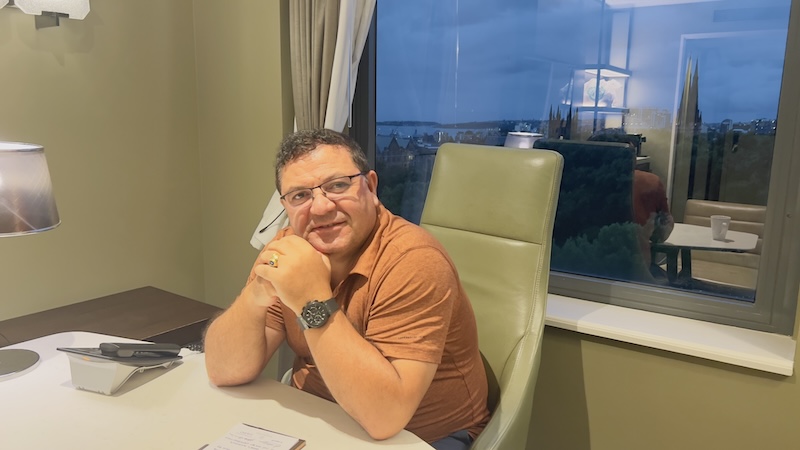
Dr. Aland Mizell is with the MCI, SETBI and is a regular Mindanao Times columnist. You may e-mail the author at aland_mizell2@hotmail.com
.