 Cape Town, South Africa — April 2026
At the invitation of Dr. Baz, founder of the International Network of Justice Innovation (INN), Attorney Susan Cariaga, Vice President of SETBI College Education Behind Bars, and fellow delegates traveled to Cape Town to participate in a landmark moment in global justice reform.The delegation attended the United Nations–affiliated Global Convening on Justice Innovation, held from April 14–16 in partnership with the United Nations Office of the High Commissioner for Human Rights. The three-day gathering brought together 34 consultants from 19 countries working across reintegration, education behind bars, community safety, restorative justice, and legal empowerment.The convening opened at the Desmond and Leah Tutu Legacy Foundation, followed by a powerful assembly at St. George’s Cathedral—known as “The People’s Cathedral,” a historic site of resistance against apartheid and home to Desmond Tutu. Opening remarks were delivered by Verna Harris of the Nelson Mandela Foundation, Abigail Noko of the UN Human Rights Office, and JP Smith, Mayoral Committee Member for Safety and Security for the City of Cape Town.The event also marked the launch of a new international consulting agency led by formerly incarcerated experts—an initiative committed to transforming justice systems worldwide. The convening united policymakers, donors, NGOs, and academic leaders to advance more humane and effective approaches to justice reform.Dr. 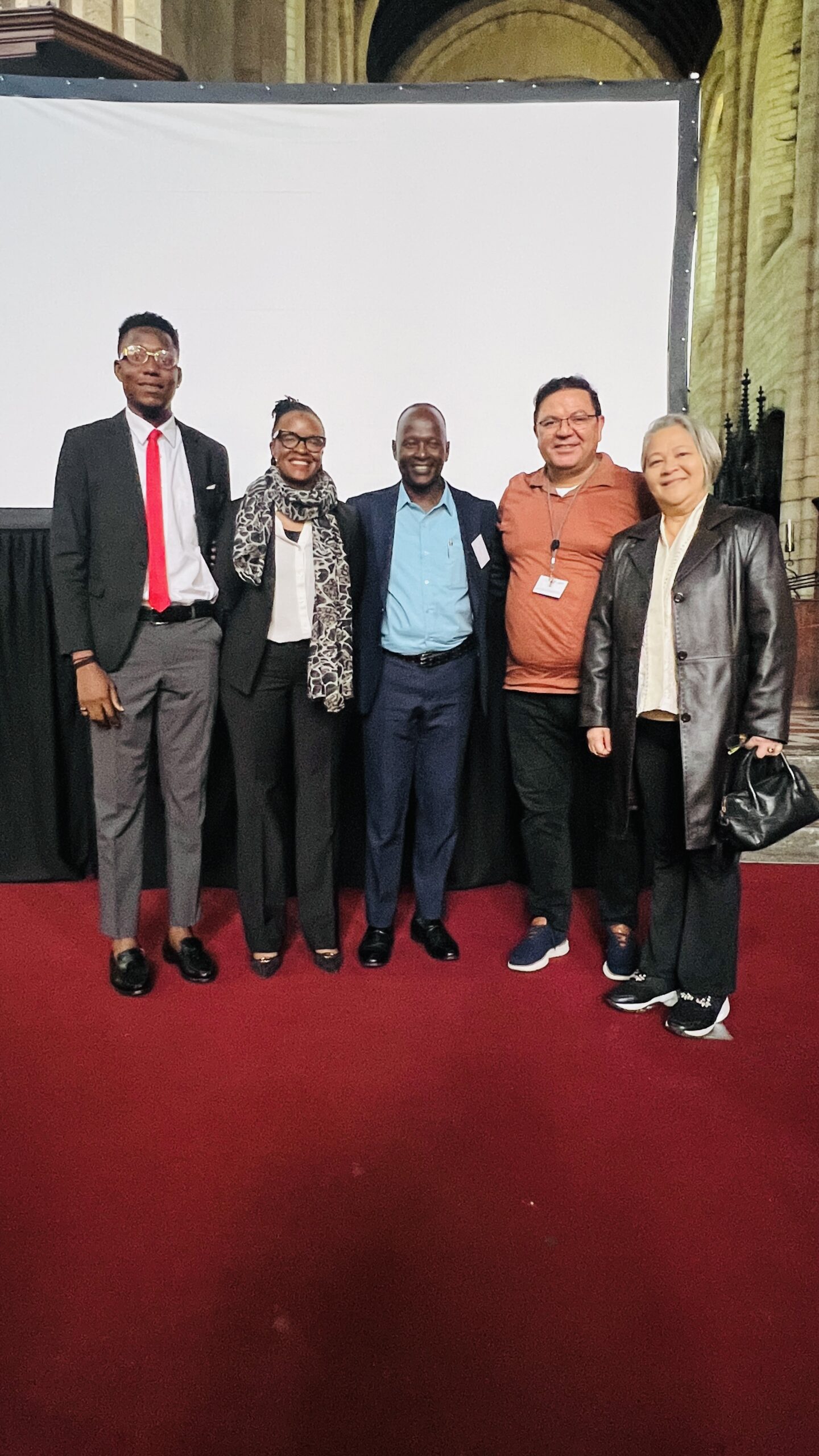 Baz led a panel featuring global consultants, including Jazz Singh, Joel Caston, Franco Ruz, Dandara Zainab, and James Leonard, who emphasized a shared truth: college education in prison is not only a response to systemic injustice, but also a foundation for meaningful change rooted in lived experience.The third day, held inside Brandvlei Correctional Centre, embodied INN’s motto: “Education, Not Incarceration.” The visit served as a powerful reminder that second chances can redefine lives. For many incarcerated individuals, prison becomes a place not only of accountability, but also of reflection, education, and rebuilding.
Stories shared during the convening highlighted individuals who pursued studies while on death row and others who journeyed from incarceration to earning PhDs. These experiences reaffirmed a profound truth: a person’s past does not have to determine their future. What makes the difference is access to opportunity—education, trust, and the chance to be seen beyond one’s worst mistake.
Second chances are not about ignoring accountability; they are about recognizing human potential. When societies invest in rehabilitation rather than punishment alone, they reduce recidivism and build safer communities. In that sense, second chances are not only compassionate—they are practical.Representatives from Philippines proudly shared that SETBI College Education Behind Bars has, for more than a decade, provided incarcerated men and women access to four-year college degrees, senior high school diplomas, and recovery-focused courses. Despite ongoing challenges,, the program continues to transform lives through education. More than 130 PDLs graduated from the program and and many of them fully employed . Has low recidivism rate
College education behind bars matters because it reshapes identity, restores dignity, and creates pathways toward productive citizenship and lasting social change