
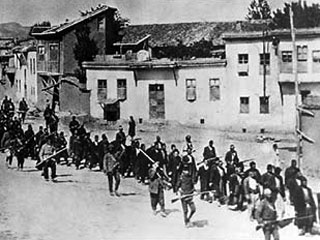
 Last two weeks the world commemorated the centennial of two events that shaped the modern history of the Turkish Republic and the Armenian people. The first event was the Battle of Gallipoli where the Ottoman Empire forces put up resistance to defend the Strait of Dardanelles stopping the European Allied forces. If Turkey had lost that war, the fate of Turkey would be very different today; a majority would speak English or French, not Turkish. The second event of the April 24th, 1915 was the Ottoman Empire’s decision to arrest and exile Armenians to the Syrian city of Aleppo. The Armenians consider the mass deportation and systematic massacre to be genocide, while the Turkish government denies that it was genocide, saying that the killings were a necessity of war. As a matter of fact, many of the major superpowers committed atrocities against others who did not agree with them or who objected to their power and, as a consequence, crushed them with bloodthirsty forces. We see some of the heads of states publish emotional statements to commemorate the victims of war. Their true motive is not about human feelings, but about still using the moment as a scapegoat or symbol for their political and personal purposes. Continue reading



Meet the Author
Dr. Aland Mizell is with the University of Mindanao School of Social Science, President of the MCI and a regular contributor to The Kurdistan Tribune, Kurdishaspect.com, Mindanao Times and Kurdish Media.You may email the author at:aland_mizell2@hotmail.com.Categories