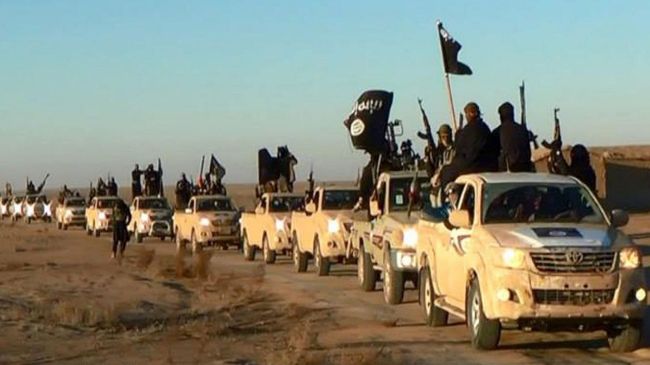
 In 1916, Great Britain and France secretly reached an agreement, known as the Sykes-Picot agreement, by which France and Britain divided up the Arabs’ territories of the Ottoman Turks into spheres of influence. Both countries agreed that each country should be allowed to establish such direct or indirect administration or control of the Arab states as they desired or saw fit. The British would have direct control over the Baghdad and Basra provinces of Iraq while the rest of the territory such as the Mosul area, Syria, Iraq, and Jordan would have local Arab chiefs under French supervision. For decades, the Middle East was impacted by the Cold War and petro politics. The United States supported oil rich monarchies; the Soviets supported its friends Syria, Iraq, and Libya. Today, Iraq is formally divided into three states: the Kurds, the Shiites, and the Arabs. The Islamic State of Iraq and the Levant (ISIL) is a brutal organization, a group of extremist Sunni Islamic militants. It is not merely breakaway organization of al- Qaeda, but rather a mix of Sunni grievances and disillusioned former baath party elements, Sunni tribes who lost the privileges and power who do not want to be rule by the Shiite majority
Having grown out of the Al-Qaida structure, the ISIL is rapidly becoming one of the most dangerous groups in the Middle East with different Jihadist groups becoming active in various regions. They have amputated themselves from the Al-Qaeda group by carrying out public crucifixions and beheadings. Actually the U.S., Turkey, Saudi Arabia and other countries supported this group in its fight against Assad in Syria. Without the external powers’ aid this group would not have become so powerful. The ISIL announced its formation in 2013, when groups were presented the opportunity for a merger between the Islamic State of Iraq, Al- Qaida, and the Syria Jihadist rebel group. Otherwise, it is very hard to believe how an organization much smaller in size than the Iraq security force could occupy their positions without any resistance taking main Baiji Oil refinery in a very short time and now threatening taking Baghdad. ISIL is one of the wealthiest terror organizations than Al-Qaida
The turmoil in the Middle East is about the new Middle East projects and the new map of the Middle East. Under the Middle East projects, major players are trying to democratize Islam. I don’t think what happening in the Middle East is due to the sectarian policies of Prime Minister Nouri al- Maliki, but I do think, it is about struggle for leadership in the in the region. Struggle of power between Sunni and Shiite. The war between Shiite and Sunni is going to divide Iraq into three states. This means some of the borders will be rearrange and will be end of status quo. The U.S government implemented wrong policies after invasion of Iraq. The US. At the end, the U.S government might use this event as an opportunity to start new relationship and agreement over its nuclear program and Syria issue because Sunni Islam is majority and the most of jihadist are Sunni and are not Shiite. This will lead to new American policy toward Iran.
Many Sunni Muslims do not accept Shiites as true believers of Islam and consider them as disgraced people. Furthermore, the war in Syria has caused great division among the Sunni and Shiite Muslims. The current turmoil is about who should have more power, Shiite Islam or Sunni Islam. The Sunni Islamic countries, such as Turkey, Saudi Arabia, the Gulf countries, and others are strongly against the Iranian Shiite government’s having more power and influence in the Middle East. That is why they supported these Jihadist extremists’ fighting in Syria against Iranian interests and the Assad regime. Indeed, the ISIL was not formed by surprise; they got their support from Turkey, the U.S., the Gulf countries, and of course Saudi Arabia, primarily to fight against Assad regime in Syria but incrementally their role got out of the hand.
President Obama is taking a nap when it comes to the Middle East. He thinks somehow all the factions in Iraq will get along if they are treated fairly. But failing to understand, he does not realize that each faction wants to have total power over the other factions. The issue is about ideology, not about justice or fairness. It is about Shiite and Sunni power, a power struggle between the Shiites and Sunnis that started after the death of Mohammed in the sixth century and, therefore, will not be solved overnight. Iraq is a Muslim country, the aggressors are Muslims, the Iranians are Muslims, and the victims are Muslims; thus, for now the problem is about a radical ideology.
Another problem in understanding arises from America’s believing that only Shiites are radical and against American interests, and, consequently, America is supporting the Sunni over the Shiite religious sect. That is why the Obama administration officials have hesitated to provide the Iraqi military forces with advanced weapons, including fighter jets and attack helicopters because President Obama does not trust Iraqi Prime Minister Nouri al- Maliki, a Shiite. Obama believes Malik could use these against his Sunni populations. Iraq asked the U.S. to provide the intelligence equipment, such as armed aerial drones, to combat against the Jihadists, so the U.S government agreed to give small drones that did not carry weapons. The question is why was US intelligence agencies unable to predict first the crisis in Bengasi and now the one in Iraq? In truth those who killed three thousand Americans were not a Shiite group but were Sunni groups because Al-Qaida is Sunni.
If the Obama administration wants to be successful in the Middle East and specifically in Iraq, it might look to the autonomous Kurdish region. The only people who could help save the Americans from this mess are Kurds, even if America has repeatedly betrayed them. If the U.S. had kept a base in Kurdistan prior to the troop withdrawal, it would be in a much better position to monitor this situation. For decades Arabs, Persians and Turks have oppressed the Kurds. President Obama does not want to send American troops to Iraq to fight, so America will probably do some kind of short air strike. I have always said and repeat again that no matter what America does to help or not to help, these groups will still hate America. America has failed over and over by ignoring the Kurds and supporting Iraq’s central government. It was and is in the best national interest of America to support the Kurds and enhance Kurdish autonomy or even to foster an independent state comprised of Kurdish people.
It was very interesting to see that U.S intelligence agencies were surprised when the ISIL seized major Iraq cities last week and sent the Iraqi defense forces fleeing without a fight against the rebels. This failure to anticipate has raised serious questions and significant doubts about the ability of American intelligence agencies to know when ISIL or any other terrorist group might strike again. Of course, American detractors will ask if this could be well planned and American intelligence knows about it. Both ways it is troubling because every year America spends billions of dollars on monitoring the world’s hot spots, which has paid off. Now Iraq is faced with a social volcanic eruption boiling for more than eleven years within its borders.
The memory of oppressed people is one thing that cannot be taken away, and for such people, with such memories, uprisings always happen at and below the surface. Shiite groups have very bad memories from the Sunni rule of Saddam Hussein. Sunnis are now having bad memories from the Shiite rulers of the Al Maliki government. Currently history is paying for its mistakes; for decades Kurds were fighting for their territories from northeast of Baghdad to Mosul and to the oil rich city of Kirkuk. Both the Arabs and the Turks were against the Kurdish claim and especially Arabs were holding on to these northern cities with great pride. The Turks supported the Arabs in its argument that Kirkuk should not be part of Kurdish control and that it should be run by a special administration of Arabs, Kurds and Turkmen, but Iraqi forces fled the city as the ISIL took over Mosul. In addition, the Iraqi government left Kirkuk, allowing the Kurds finally to take Kirkuk on a golden plate.
The Kurds are the real winners of this event in Iraq. If the Kurds play their cards right, and if the Kurds unite to keep the territory, they may become the victor of the Iraqi and Syrian turmoil; otherwise, the current mayhem could swallow up everybody.
Dr. Aland Mizell is President of the MCI and a regular contributor to Mindanao Times. You may email the author at:aland_mizell2@hotmail.com